



Your investment matters. Protect it
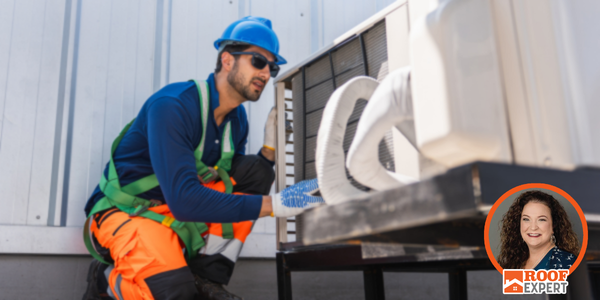
AAR Expert Wendy Marvin talks about protecting your roof when specialists outside of the trade need to access it.
You just had a beautiful new roof installed. It’s got a strong warranty, it looks sharp and you feel good knowing your home is protected. Then a few months later, the HVAC tech needs to service a rooftop unit or the painters need to set up scaffolding.
And just like that, your investment is at risk and you’re often not even aware of it.
This is one of the conversations we have often with building owners and homeowners, and honestly, it deserves more attention in the home improvement space.
Other trades don’t think about your roof
Each specialty has its own priorities. Electrical runs, refrigerant lines, panel placement, it all adds up to good things for their industry and bad things for your shingle integrity.
That’s not criticism. It’s the nature of specialized work. The problem is that roofs are uniquely vulnerable to the kind of casual, incidental contact that other trades create without a second thought.
Heat is a big deal
It’s often surprising to learn that architectural shingles can begin to soften at mild temperatures like 75 degrees. Your rooftop is often 20-30 degrees hotter than the ambient temperature outside. Walking on shingles in that condition, dragging a ladder or setting down equipment creates impressions, scuffs and granule loss that aren’t always visible from the ground, but directly affect performance over time.
Tradespeople aren’t thinking of your roof, their minds are on their own job and maybe even other things while they’re working.
Equipment damage
Ladders leaned against roof edges. Scaffolding systems that bear weight on shingle surfaces. Dropped tools bounce and slide. These things happen, and because it’s not “their” job to think of roofing, specialty contractors often aren’t careful, nor do they notice the damage they’re causing.
We have pulled hammers and other tools out of gutters many times. Tools, debris, screws, wire cuts – all of it ends up washing into the gutter system and clogging downspouts. To them it’s a minor mess, but to you, when your gutters overflow it’s a BIG headache.
As an owner – do this before you allow them up
Document everything. Take photos. Take video. Walk around the entire perimeter and capture close-ups of every valley, every area around your penetrations, every edge. Make sure those photos are date and time stamped – your phone typically does this automatically but make sure that setting isn’t turned off.
Maybe even go further. If multiple roof checks by other tradespeople are scheduled, document between each one. It may be 15 minutes of your time now, but it can save you thousands later.
Before you allow tradespeople on your roof, here are a few ground rules I’d suggest:
- No ladders laid down on or dragged across shingles.
- No equipment or materials staged on the roof surface unless a protective barrier is placed.
- Cool weather work only. Early morning or a cool day.
- Retrieval of all debris and tools is mandatory before they leave.
Let them know, you will be documenting before and after. Say it directly to them. It changes behavior.
Your roof investment matters
A quality roof installation, properly maintained, can protect your home for decades. But warranties have conditions, and “another trade damaged it” isn’t covered. The best position to be in is being able to resolve any issues immediately because you have the proper documentation to determine fault, and you’re willing to hold people accountable. Protect your investment. Direct conversations and a few photos show trades you mean business, and it will keep the attention focused on the right thing. Protect your beautiful home.
Wendy Marvin is the CEO of Matrix Roofing. See her full bio here.
Recommended For You
One common oversight homeowners make
Read More ...
What owners should know before other trades go on the roof
Read More ...
The importance of hiring professionals
Read More ...





Comments
Leave a Reply
Have an account? Login to leave a comment!
Sign In