


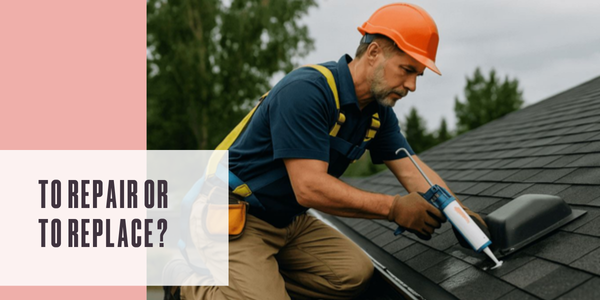
To repair or to replace?
By Orca Roofing & Exteriors.
Evaluating age, damage and climate factors can clarify the best path forward for homeowners.
Deciding whether to invest in roof repair or move forward with a full roof replacement is one of the most important maintenance choices a homeowner can make. Here at Orca Roofing & Exteriors, we know that the right answer requires a closer look at roof age, the extent of damage, prior repairs and whether continued fixes make financial sense over time. Making the right call early can prevent structural damage and help homeowners avoid unexpected costs.
In this article, our team at Orca Roofing & Exteriors breaks down how to evaluate your roof’s condition, recognize early warning signs and understand when repair is sufficient versus when replacement offers better long-term protection and value. Each homeowner’s situation is unique, and a professional assessment can help you make a confident decision.
Understanding roof repair versus roof replacement
Before deciding how to move forward, it’s important to understand what each option truly involves — and how they differ in cost, scope and long-term results. Both aim to protect your home, but one is a short-term solution while the other provides lasting peace of mind.
What each option means
- Roof repair: A repair focuses on targeted fixes for leaks, missing shingles, cracked flashing or localized damage. It’s best suited when the rest of the roofing system is still in good shape. Repairs are faster and less expensive, making them a smart choice for newer roofs or isolated problems — but over time, multiple small repairs can become costly.
- Roof replacement: A replacement means stripping away all existing materials — shingles, underlayment, flashing — and installing a completely new roofing system. This ensures structural integrity, improved ventilation and stronger weather protection for decades to come. It’s ideal for older roofs, widespread deterioration or major storm damage.
When you’re not sure
Many homeowners misjudge the condition of their roof. What looks like a simple leak could be a sign of hidden moisture damage or weakened decking. That’s why scheduling a professional inspection is the safest first step. An experienced roofer can assess whether a quick fix will hold — or if investing in a full roof replacement is the more cost-effective, long-term choice.
Key factors to consider before deciding
Choosing between a roof repair and a roof replacement comes down to a few practical factors — from your roof’s age and damage extent to long-term goals and budget. Use this quick comparison chart to help guide your decision before calling in a local professional.
|
Factor |
Roof repair makes sense if… |
Roof replacement makes sense if… |
|
Roof age |
Less than 10–15 years |
20+ years or nearing the end of its warranty |
|
Damage area |
Small or localized |
Multiple leaks or large sections are failing |
|
Cost |
Repair is under 30% of replacement |
Repeated repair costs are adding up |
|
Curb appeal |
Roof still looks uniform and clean |
Faded, sagging or visibly uneven appearance |
|
Energy efficiency |
No major ventilation or insulation issues |
Noticeable heating or cooling loss |
|
Future plans |
Selling your home soon |
Staying long-term and want ROI payoff |
Common roof damage scenarios and what they mean
Not all roofing issues call for a full replacement — but some can’t be solved with a simple patch, either. Here’s how to identify what different types of damage really mean for your roof and when to act before minor problems become costly repairs.
1 - Minor leaks or missing shingles
If you notice a small leak or a few missing shingles, a quick repair is often enough to restore protection. In many cases, re-sealing flashing or replacing a few damaged shingles will do the trick. However, if the leak keeps coming back or spreads to multiple areas, it may signal deeper issues beneath the surface.
Tip: Learn how to address small leaks safely in our Roof Leak Quick Guide.
2 - Widespread water damage or mold
When water seeps under shingles or into the roof decking, it can cause mold growth, rot and structural weakening. These problems often go unnoticed until stains appear on ceilings or the attic smells musty. At that stage, roof replacement may be the only way to ensure long-term protection, since repairs won’t fix moisture trapped inside the structure.
3 - Storm, hail or wind damage
Heavy rain, gusty winds and the occasional hail can quickly expose weak spots in older roofs. Strong winds may lift shingles, while hail can crack protective granules, letting water in. If your area just faced a storm, schedule a prompt inspection to assess damage early and prevent leaks from spreading.
4 - Aged or curling shingles
When asphalt shingles start to curl, cup or crack, it’s a clear sign the roof is nearing the end of its lifespan. UV exposure and weathering make shingles brittle, leading to gaps where water can infiltrate. If your roof is 20+ years old and showing these signs, replacing it now can help you avoid repeated leaks and escalating repair costs later.
Roof repair versus roof replacement cost
Understanding the cost difference between roof repair vs replacement can help you budget wisely and avoid surprises. On average, minor roof repairs range from $500–$3,000, while a full roof replacement typically costs $10,000–$30,000+, depending on size, material and roof complexity. Labor usually accounts for 50–60% of the total price.
|
Service |
Average cost range |
Best for |
|
Minor roof repair |
$500–$1,500 |
Small leaks, flashing issues |
|
Moderate repair |
$2,000–$4,000 |
Partial section repair |
|
Full roof replacement |
$10,000–$30,000+ |
Aged or failing roof |
|
Premium roof replacement |
$30,000–$50,000 |
Metal, slate or composite materials |
How to tell when repair isn’t enough
Even well-timed repairs can only go so far. At some point, the damage or age of your roof may make replacement the smarter — and more cost-effective — choice. Here’s how to recognize the difference between a roof that still has life left and one that’s ready to be replaced.
Signs you need a full roof replacement
If your roof shows these warning signs, it’s likely beyond the point of repair:
- Frequent leaks even after multiple fixes.
- Granule loss, curled or cracked shingles across large sections.
- Sagging roof deck or visible daylight in the attic.
- Higher energy bills due to poor insulation or ventilation.
These issues suggest your roofing system — not just the surface — is failing, meaning repairs will only delay the inevitable.
When repair still works
A roof repair is still a solid option when:
- You’re dealing with a small leak or missing shingles on an otherwise healthy roof.
- You plan to sell soon and just need a short-term fix to maintain curb appeal.
In these cases, a quick, professional repair can save money and buy you time before a full replacement becomes necessary.
|
Roof condition |
Repair or replace? |
Why |
|
One small leak or missing shingles |
✅ Repair |
Localized damage, easy to fix |
|
Multiple leaks or water stains indoors |
❌ Replace |
Indicates widespread moisture intrusion |
|
Roof under 15 years old |
✅ Repair |
Still within typical lifespan |
|
Roof 20+ years old |
❌ Replace |
Nearing end of service life |
|
Curled or cracked shingles |
❌ Replace |
Shingles are failing structurally |
|
Good appearance, no sagging |
✅ Repair |
No structural issues detected |
Professional versus DIY roof repair
Why professional evaluation matters
When it comes to deciding between roof repair vs replacement, a certified roofing professional brings insight and precision that DIY inspections often miss. Hidden moisture, deteriorating underlayment or subtle structural damage can go unnoticed — until they cause costly problems later on.
At Orca Roofing & Exteriors, every inspection is performed by licensed and insured roofers who follow strict safety protocols. We use high-quality materials, document every issue with photos and provide transparent recommendations — whether your roof only needs a minor fix or a complete system replacement.
 Long-term benefits of roof replacement
Choosing a full roof replacement isn’t just about fixing current issues — it’s about investing in your home’s future. A new roof offers:
- Higher energy efficiency and resale value, thanks to modern materials that improve insulation and curb appeal.
- Advanced roofing options like architectural asphalt, metal or composite shingles that perform better and last longer than older systems.
- Peace of mind from new warranties, proper attic ventilation and enhanced protection against heavy rain and wind.
When in doubt, get a professional inspection
Still unsure whether your roof needs repair or replacement? The smartest next step is a professional roof inspection.
Original article and photo source: Orca Roofing & Exteriors
Disclaimer: The information provided on AskARoofer.com or information sent by emails is the opinion of the writers. It is the responsibility of the reader to check for accuracy in one's own jurisdiction, as there are different codes and restrictions for different parts of the country. AskARoofer.com does not accept any liability for the use of information on this website or email. AskARoofer.com has no controls over product failures, installation, or climate conditions that may change the roofing process in your area. Our information is in general to our area and cannot be the same as your local town or state. It is advised to seek the local Building Department, Licensed Contractor and local Product Representative for proper installation requirements and code enforcement when installing a new roof.
Have a question? AskARoofer.
Find your local roofing contractor in the AskARoofer™ Contractor Directory.
Recommended For You
5 steps to handle a denied roof insurance claim
Read More ...
The roof revival you didn’t know you needed
Read More ...
Q&A – Pros and Cons of Overlay Versus Tear Off
Read More ...





Comments
Leave a Reply
Have an account? Login to leave a comment!
Sign In