



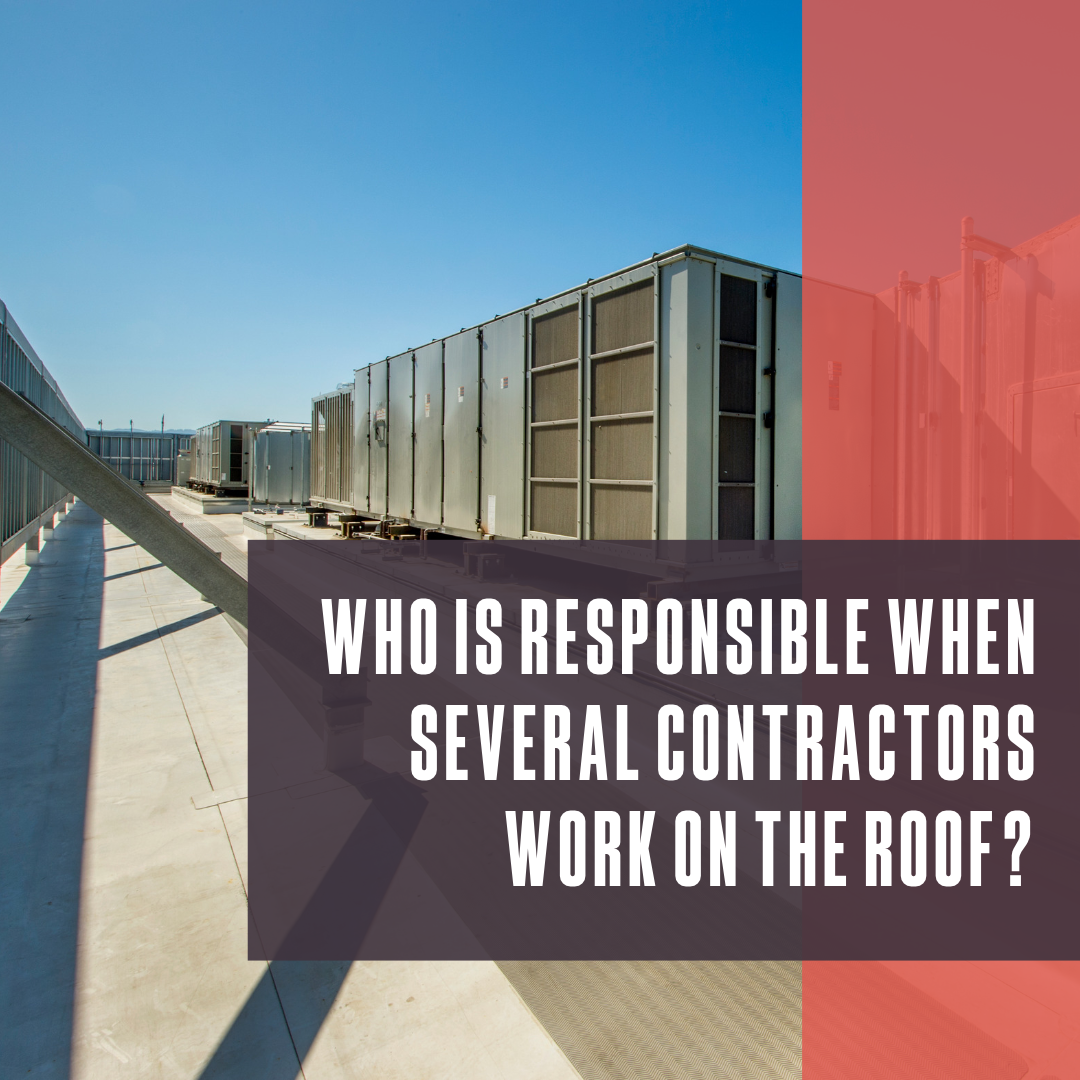
Who is responsible when several contractors work on the roof?
By Cotney Consulting Group.
Responsibility should be established before several contractors begin working on the roof, not after water enters the building.
A commercial roof may be accessed by far more than the roofing contractor. HVAC technicians, electricians, plumbers, solar installers, sign companies, communication contractors and maintenance personnel may all need to work on rooftop equipment at some point.
Each contractor may be focused on completing a specific assignment. The problem is that their work can affect the roofing system even when roofing is not part of the original scope. A new penetration may be added. Equipment may be moved. Supports may be placed directly on the membrane. Debris may be left behind.
A temporary patch may be installed and forgotten.
When a leak appears later, determining responsibility can be difficult. The roofing contractor may say another trade caused the damage. The equipment contractor may say the roof was already deteriorated. The owner may have no record of what the roof looked like before the work began. That is why responsibility should be established before several contractors begin working on the roof, not after water enters the building.
The building owner must control rooftop activity
Every contractor is responsible for avoiding damage to the property, but the building owner or property manager must establish and enforce rooftop access controls. Without an access policy, contractors may enter through an unlocked hatch, complete their work and leave without reporting where they were or what they changed. That makes accountability almost impossible.
The owner should know who is accessing the roof, why they are there and where the work will occur. A simple access log can record the date, company, technician, purpose of the visit and rooftop area involved. For larger properties, contractors may also be required to check in with building management before accessing the roof and again upon completion of the work. The goal is not to make routine service difficult. It is to create accountability and ensure that everyone working on the roof understands the rules.
Every contractor should have a defined scope
Problems often begin when project responsibilities are assumed rather than written. The HVAC contractor assumes the roofing contractor will flash the new lines. The roofer assumes the electrician will provide the equipment supports. The owner assumes both contractors are coordinating. When those assumptions are wrong, important work can be missed.
The written scope should clearly identify who is responsible for roof protection, penetrations, temporary weather protection, permanent flashing, equipment supports, debris removal and final inspection. If a contractor will need to cut, drill, fasten through or otherwise modify the roofing system, that work should be identified before the project begins.
The scope should also explain who has authority to approve changes. A technician in the field should not be forced to improvise a roofing detail because the project team never decided who would handle it.
The roofing contractor should be involved early
The roofing contractor should not be called only after another trade has already altered the roof. By then, penetrations may have been cut, equipment may be blocking access and temporary repairs may have been installed.
Early involvement allows the roofing contractor to review the proposed work and identify how it will affect the existing system. The roofer can advise where penetrations should be located, what flashing details are required and whether supports or walkways are needed. The contractor can also review drainage paths, warranty requirements and access limitations.
This coordination is especially important on warranted commercial roofs, where unauthorized work may affect coverage. The roofing contractor does not need to manage every part of the project, but should complete, direct or inspect the work that alters the roofing system.
Existing conditions should be documented
Before major rooftop work begins, the existing roof condition should be recorded. Photographs should show the work area, membrane or roof surface, nearby seams, flashing, drainage points, equipment curbs and any known damage. A roof plan can identify where the contractor will be working. This protects everyone involved.
The new contractor is not responsible for a puncture, an open seam or deteriorated flashing that existed before the work began. The owner has a record of the starting condition. The roofing contractor can compare the area after the project is complete. Without documentation, disagreements often depend on memory. A dated photographic record provides far better evidence than someone saying the roof “looked fine” before the work started.
Roof protection should be planned
A roof is a finished building component, not an unrestricted work platform. Contractors may need designated walkways, protective mats or temporary work surfaces when moving equipment and materials. Sharp tools, sheet metal panels, motors, compressors and other heavy components should not be placed directly on the roof membrane. Materials should be staged away from drains, scuppers and areas where they may block water flow. Workers should also avoid dragging tools, equipment or debris across the surface.
Protection requirements should be discussed before the contractor arrives, especially when crane work, large equipment replacement or extensive service activity is planned. The cost of temporary protection is usually minor compared with the cost of repairing punctures, compressed insulation or widespread surface damage.
New penetrations need clear responsibility
A new pipe, conduit, support or electrical line may seem like a small part of the project. From a roofing standpoint, however, every penetration creates another location where water must be managed.
The project scope should identify who will create the opening, who will provide the penetration component and who will complete the permanent flashing. A hole should not be cut in the roof with the assumption that someone will seal it later. Temporary caulk, tape or roofing cement may not provide reliable protection and can make the final flashing more difficult to install. The roofing contractor should use materials and details compatible with the existing roof system. Once the work is complete, the penetration should be documented and added to the roof records.
Equipment supports must be coordinated
Piping, conduit, ductwork and equipment should not be placed directly on the roofing membrane. Improvised supports can hold moisture, restrict drainage, concentrate weight and damage the roof as they move or vibrate. Wood blocking, loose pavers and unapproved supports are common examples of temporary solutions that become permanent. The appropriate support depends on the load, roof type, movement and equipment involved.
Responsibility for designing, providing and positioning those supports should be established in writing. The mechanical or electrical contractor may determine what support the equipment needs. The roofing contractor should confirm that the selected support will not damage the roof or interfere with drainage. Both perspectives are necessary.
Temporary weather protection must be assigned
Some rooftop projects require the roof to remain open while equipment, curbs or penetrations are being changed. If the work cannot be completed immediately, temporary protection may be necessary. The project team should know who is responsible for keeping the building watertight during that period.
This is especially important when delays occur due to weather, equipment delivery, crane scheduling or another contractor’s availability. A temporary covering should be designed for the expected conditions and inspected regularly until the permanent work is finished. Responsibility cannot be left unclear. When several contractors are involved, each may assume someone else is protecting the opening. The owner should require one party to accept that responsibility in writing.
Debris removal is part of the work
Rooftop work often leaves behind more than the equipment that was installed. Fasteners, wire clippings, sheet metal, old filters, packaging, pieces of insulation and abandoned parts may remain on the roof after the contractors leave. These materials can puncture the roofing system, block drainage and become windborne during a storm.
The project scope should require each contractor to remove its own tools, materials and debris. A final cleanup should include the work area, access route and nearby drains. The roofing contractor or property representative should confirm that the roof has been left clean. The project is not complete simply because the equipment operates. It is complete when the work area has been restored, debris has been removed and the roofing system remains protected.
Post-work inspection creates accountability
A final inspection should be completed after major rooftop work. The inspection should verify that new penetrations are properly flashed, supports are correctly placed, drainage remains open and no surface damage occurred during the project. Photographs should document the completed condition. If damage is found, it should be reported and corrected before the contractors demobilize whenever possible.
A post-work inspection benefits all parties. The owner receives confirmation that the roof remains watertight. The equipment contractor has the opportunity to address any issues related to its work. The roofing contractor can update the roof history and warranty records. Waiting until the next rain to discover whether the work affected the roof is not an inspection plan.
Warranty requirements must be reviewed
Commercial roof warranties may include specific procedures for alterations, penetrations and equipment changes. Some manufacturers require prior notification. Others require approved flashing details or inspection by an authorized contractor. A contractor unfamiliar with the roof warranty may complete technically acceptable equipment work but still create a coverage problem.
Before the project begins, the owner should locate the warranty and confirm the requirements. The roofing contractor should document any authorized modifications and provide completion photographs or reports. Those records should be stored with the warranty and roof maintenance history. The owner should never assume that another trade can modify the roof without affecting warranty obligations.
When damage occurs, facts matter
Even with planning, roof damage can still occur. When damage occurs, the owner should begin with documentation and facts rather than assumptions. What work was performed? Which contractor accessed the area? What did the pre-work photographs show? Was the damage located within the work zone? Were penetrations or supports added? Was a post-work inspection completed?
The roofing contractor should document the condition and explain how it may have occurred. The contractor responsible for the rooftop work should be allowed to review the findings. Insurance carriers may also become involved if the damage is significant. Clear records make these conversations easier. Without documentation, the owner may spend more time arguing over responsibility than correcting the problem.
Emergency repairs should not erase accountability
If the roof is actively leaking, stopping the water must come first. That may require immediate temporary repairs before the full cause can be investigated. However, emergency work should still be documented.
Photographs should be taken before the condition is covered whenever it is safe to do so. The repair report should identify the location, the observed damage and the temporary work completed.
After the building is protected, the owner can review the project history and determine what permanent repairs are necessary. An emergency should not become an excuse to lose the evidence needed to understand what happened.
Coordination protects every contractor
Clear responsibility is not only for the owner’s benefit. It also protects the contractors. An HVAC company should not be blamed for pre-existing roof deterioration. A roofing contractor should not be held responsible for an unauthorized penetration created after its work was completed.
Written scopes, access logs and inspection records help separate existing conditions from new damage. They also reduce conflict between trades by making expectations clear before work begins. Good coordination allows each contractor to focus on its own expertise while understanding where its work connects to the roofing system.
The owner must create accountability
When several contractors work on the roof, responsibility cannot be left to chance. The owner or property manager should control access, define the scopes, involve the roofing contractor, document existing conditions and require a final inspection Every penetration, support, equipment change and temporary opening should have an assigned responsible party.
Contractors should know how the roof must be protected and what records are required upon completion of the work. The roofing contractor, mechanical contractor, electrician and other trades do not perform the same work. Their responsibilities may be different, but their work often meets at the roof.
When the owner establishes access controls, assigns responsibility in writing and requires documentation before and after the work, the project is far more likely to be completed without compromising the roofing system's performance.
Learn more about Cotney Consulting Group in their Coffee Shop Directory or visit www.cotneyconsulting.com.
Recommended For You

Roofing work affects more than the roof
Read More ...
Strong customer reviews drive roofing contractor to Top 3 designation
Read More ...
How deferred roof maintenance spreads damage through a building
Read More ...




Comments
Leave a Reply
Have an account? Login to leave a comment!
Sign In