

Code compliance and wildfire prevention
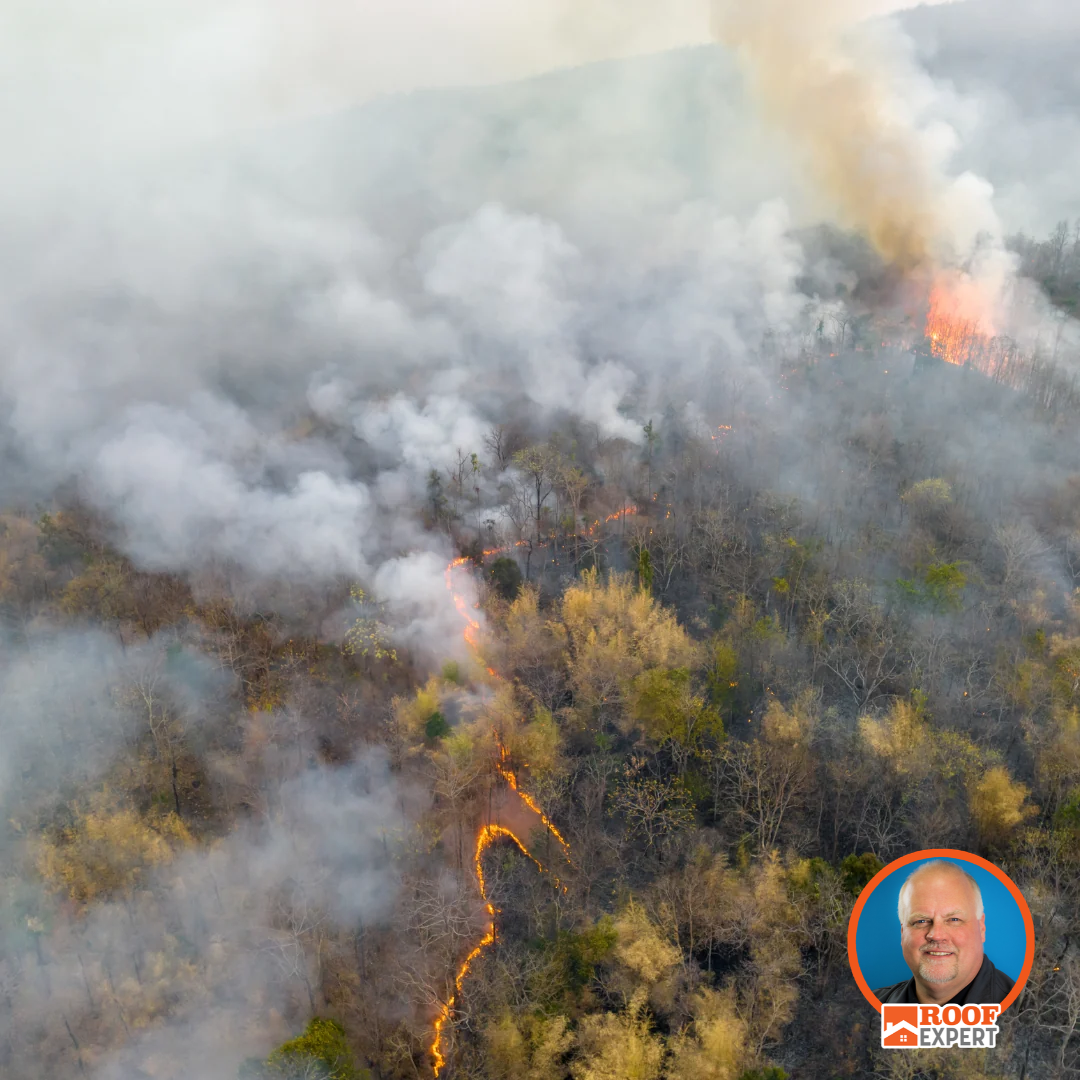
AAR Expert Will Lorenz breaks down fire safety.
Editor's note: The following is the transcript of a live interview with Will Lorenz of General Coatings. You can read the interview below, listen to the podcast or watch the recording.
Emma Richardson: Hi everyone, I'm Emma Richardson with AskARoofer.com and I'm talking to our roofing expert, Will Lorenz from General Coatings. Will, it's great to see you.
Will Lorenz: Emma, thank you again. Beautiful day in paradise here.
Emma Richardson: We're always glad to have you. Well, today we're talking about our October expert topic, which is wildfire fire protection and code compliance. Will, can you talk a little bit about how building codes impact Roofing decisions in fire prone areas?
Will Lorenz: Yes, that's a great question. Over the years, many roof systems were either Class C or Class B, which was sort of the least fire protected. They were designed to be waterproof. They performed as waterproofing, but as, you know, concerns over significant fire events, hurricane events, hail events. The building codes have been strengthened over a period of time. And with regard to concerns about fire, we've seen the influence of more things to make it more Class A, which is the most fire protective that you can get there. Most of us, like General Coatings and other quality manufacturers, have UL credentials, underwriter laboratories. We test our roof systems to class A performance. We're recognizing that this wildlife interface is very important and so that we have materials that are resistant to the initial application of fire towards it. And then also they don't have significant sustained burning if there were embers or something on that roof system. And so we've tried to design systems to the highest level. And recently, UL in discussions are looking at trying to ways to enhance it with a type one, two, and three performance that they're trying to bring out, hopefully in 27 or 28, that will enhance the codes so that we as manufacturers can have systems that are superior in fire performance to protect the people and their clients so that wildlife urban interface can be just a normal occurrence. We build them just the right way.
Emma Richardson: That's awesome. That's a really important part of this. Maybe you can meet the code, but even learning how to exceed it and even do even better is a really wonderful thing to do. So I think that's great.
Will Lorenz: It is, it's very important. You know, life safety is what all of us are about. People come out to roofs, they want to be safe, getting on the roof, they want to be safe, living in the home that has that beautiful new roof. And we want to do what we can to protect people and design roof systems and assemblies that are tested to the max so that they're resistant to any of those unfortunate fire events that might occur.
Emma Richardson: For sure. Well, Will, thank you so much for your time. We'll catch you next month.
Will Lorenz: Thank you very much, Emma.
Recommended For You
Wildfire resistance is more than choosing a roofing material
Read More ...
Roofing with wildfires in mind
Read More ...



Comments
Leave a Reply
Have an account? Login to leave a comment!
Sign In