



A sustainable roof still has to perform
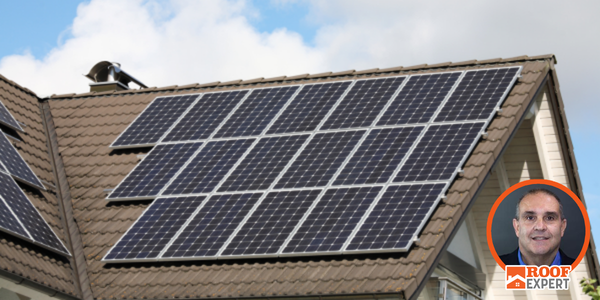
AAR Expert John Kenney says the most sustainable roof performs properly, uses resources responsibly and delivers the greatest value over its useful life.
Sustainable roofing has become a much bigger part of the conversation for homeowners and building owners. Cool roofs, reflective coatings, recyclable materials and energy-efficient systems all have real value.
But after decades in roofing, I believe one point needs to stay at the center of the discussion:
A roof is not sustainable if it does not perform.
The goal should never be to select a roofing system simply because it carries a green label. The better question is whether the system provides the right balance of durability, energy performance, lifecycle cost and environmental impact for that particular building.
Cool and reflective roofs are a good example.
Roof surfaces that reflect more solar energy can help reduce heat absorption, particularly in warmer climates. That can lower roof surface temperatures and may reduce the cooling load on the building when the roof is part of a properly designed overall system.
But reflectivity is only one part of roof performance.
A reflective roof can reduce solar heat gain, but insulation, ventilation, building use and climate still determine the overall energy result. That is why I encourage owners to think about the roof as part of the building envelope rather than as an isolated product.
Material selection matters as well.
Metal roofing, for example, offers strong recyclability and can provide a long service life when properly designed and installed. Other roofing systems may also contain recycled content or offer recycling opportunities depending on the material and local market.
The important point is to look beyond the marketing language.
Ask how long the system is expected to perform. Ask what maintenance will be required. Ask whether the material can be repaired or restored later in its service life. Ask what happens to the roofing material when it eventually has to be replaced.
Those questions often reveal more about sustainability than a product brochure does.
Roof restoration is another area where owners have more options than they may realize.
If an existing roof is fundamentally sound and still has useful life remaining, a fluid-applied restoration system may extend its service life without removing and disposing of the entire roof assembly.
From a sustainability standpoint, that can make a great deal of sense.
Less tear-off means less material going to a landfill. Existing insulation and other usable components may remain in place. The building experiences less disruption, and the owner may delay the environmental and financial cost associated with full replacement.
But there is an important limit.
Coating a roof that should have been replaced is not sustainable. It is simply postponing the problem.
A roof with widespread moisture, deteriorated insulation, damaged decking or significant structural concerns needs to be evaluated differently.
Covering those problems does not eliminate them.
This is where a professional roof assessment becomes important.
Before deciding between restoration and replacement, the contractor should evaluate the condition of the existing membrane, flashings, penetrations, drainage and underlying assembly. Moisture investigation may also be appropriate depending on the roof and its history.
Sometimes restoration is the responsible choice. Sometimes replacement is.
The sustainable option is the one that makes the most sense over the remaining life of the building.
Cost also has to be part of the conversation.
Owners sometimes assume that environmentally responsible choices will automatically cost more. That is not always true, especially when lifecycle cost is considered rather than just the initial installation price.
A roofing system that lasts longer, requires fewer major repairs and can potentially be maintained or restored instead of completely replaced may provide better long-term value even if the initial cost is higher.
At the same time, paying more for a feature that offers little benefit for the building or climate does not automatically make the project more sustainable.
One thing I’ve learned over the years is that good roofing decisions are rarely about choosing one feature. They are about understanding how all the pieces work together.
Performance. Durability. Energy use. Maintenance. Repairability. Material disposal. Cost.
They all matter.
Owners should also be cautious of anyone promising dramatic energy savings or environmental benefits without understanding the building. Responsible roofing professionals will explain what a system can realistically provide and where the limitations are.
Sustainability in roofing should not require choosing between protecting the environment and protecting the building.
The best solutions do both.
The most sustainable roof is not necessarily the newest, the most reflective or the one with the strongest environmental claim. It is the roof that performs properly, uses resources responsibly and delivers the greatest value over its useful life.
John Kenney is the CEO of Cotney Consulting Group. Read his full bio here.
Recommended For You





Comments
Leave a Reply
Have an account? Login to leave a comment!
Sign In