



Q&A - Has this flashing been correctly installed?
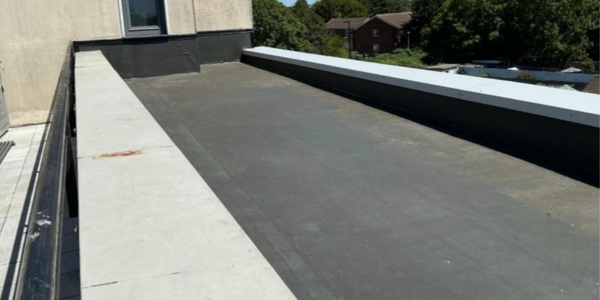
After a roof repair, one Middlesex resident is seeking a second opinion.
Alessia from Middlesex experienced a persistent roof leak and sought confirmation that the repairs are up to snuff. She asked the following:
I am seeking professional feedback regarding a recent roof replacement at my property. I live in a flat where the freeholder is responsible for structural repairs. For the past three years, we have experienced a persistent leak in the exact same spot during heavy rain. Following a surveyor's report (which included drone photos of the original green roof) and subsequent legal action for negligence, the freeholder recently replaced the green roof with an EPDM membrane. I have attached photos of the completed work. Given the long history of leaks, I want to ensure the installation was carried out correctly so the issue does not recur. Could you please review the images and advise on the quality of the workmanship? Specifically, I am concerned about: The flashing detailing along the vertical walls. Any visible defects or red flags with the EPDM installation. Whether the installation meets standard building regulations for flat roof replacements. Thank you. PS: I know that a certificate of completion has been issued and tests have been carried out, which have been fully passed
Roofing expert John Kenney from Cotney Consulting had this to say in response:
Alessia, after reviewing the photographs, I do not see anything that immediately suggests the entire EPDM installation is defective. From what is visible, the membrane appears generally smooth and continuous; the parapet has been capped and the waterproofing has been taken up at the wall and perimeter locations. Those are all positive signs.
My main focus would be the vertical wall and upstand details. On a flat roof, the waterproofing should continue up adjoining walls to an adequate height and be properly terminated and weathered. In the U.K., a 150 mm upstand above the finished roof level is commonly used as the benchmark for standard detailing. From the photographs, there does appear to be an upstand around the wall and below the window, but I cannot confirm the exact height, termination method or what is concealed behind the visible finish from these images alone.
I would also pay close attention to the corners and transitions where the wall, parapet and field membrane meet. These are often the most vulnerable areas if the detailing is incomplete. I do not see obvious open seams, major wrinkles or exposed substrate in the photographs, but adhesion, seam preparation and concealed flashing cannot be verified visually from this distance.
The fact that a completion certificate has been issued and the roof has reportedly passed testing is reassuring, but I would not treat that as proof that every roofing detail has been independently inspected. It means the relevant approval process has been completed based on the inspections and information provided. With a roof that has leaked in the same location for three years, I would still want the waterproofing details documented.
I would ask for copies of the EPDM manufacturer’s specification and installation details, photographs taken during the installation, especially at the wall and parapet upstands, the test method and results and both the manufacturer and workmanship warranties. I would also ask for confirmation that the wall and upstand terminations were installed in accordance with the EPDM manufacturer’s requirements.
My assessment from the photographs is generally positive, but limited. I do not see anything that would make me recommend opening up or replacing the new roof based on these images alone. Because of the history of leakage, I would document the current interior condition and monitor the exact area during several periods of heavy rain. If moisture returns, I would have an independent flat-roof specialist investigate the wall and upstand termination before assuming the EPDM field membrane itself has failed.
The key is not simply whether the membrane looks good from above. It is whether the waterproofing has been properly carried up, terminated and integrated with the adjoining walls. That is the detail I would want confirmed before considering the issue fully resolved.
Have a question? AskARoofer.
Find your local roofing contractor in the AskARoofer™ Contractor Directory.
Recommended For You
Q & A - Correct Way to Nail a Ridge Cap
Read More ...
Q & A - Roofing Shingle Warranties, How Good Are They?
Read More ...
Q & A - Pigeon's Causing Roof Leaks?
Read More ...





Comments
Leave a Reply
Have an account? Login to leave a comment!
Sign In