



Q&A – Gap in insulation
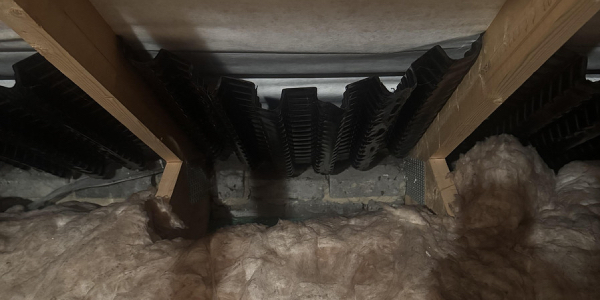
This homeowner in the U.K. noticed a gap in their insulation, so they reached out to find out what to do.
Chris, a homeowner from Hampshire, sent in the following question about the insulation in their home:
Is the insulation meant to go all the way to the brickwork? I have a gap all the way round the outside.
A couple of our roofing experts saw Chris' question and shared their insights on the issue. This is what Jamie from Bain & Irvine had to say in response to your question:
Looking at your photo, it appears to show a loft or roof space with mineral wool insulation laid between joists and a visible gap at the eaves where the brickwork meets the roof structure. There are also plastic ventilation trays (eaves ventilators) installed to maintain airflow from the soffit into the roof void.
U.K. building regulations and best practice:
- Insulation in a pitched roof or loft should generally extend to the edge of the ceiling area but must not block ventilation at the eaves. The gap you see is often intentional to allow airflow and prevent condensation.
- The insulation does not usually go over the brickwork if that would obstruct ventilation. Instead, it should be fitted snugly up to the wall plate, leaving space for air to pass through the ventilator trays.
- Approved Document C and BS 5250 (Control of Condensation) emphasize maintaining ventilation paths at eaves. Blocking these can lead to moisture problems.
So, the gap is normal if it aligns with the ventilation requirement. If the gap is excessive (e.g., leaving a cold bridge), you can use an insulation baffle or rigid board to close the gap without blocking airflow.
And this is what our other expert that responded, John Kenney with Cotney Consulting Group, had to say:
Chris, the insulation should not be packed tight against the brickwork at the eaves. What you’re seeing is intentional in a properly detailed roof assembly.
At the roof perimeter, there needs to be a clear ventilation path that allows outside air to enter at the eaves and move up into the roof space. If insulation is pushed all the way to the brickwork, it can block that airflow, leading to condensation, mold risk and higher roof temperatures. That’s why a gap is typically left at the edges.
What is important is that the airflow path is controlled rather than random. In many cases, this is done with vent baffles or trays that keep the insulation in place while directing air upward. From your photo, it appears the insulation is pulled back, but there’s no clear baffle visible, which could allow insulation to shift over time and partially block ventilation.
If you’re concerned about heat loss, air sealing at the ceiling level (not stuffing insulation into the eaves) is the correct way to address that without compromising ventilation.
Have a question? AskARoofer.
Find your local roofing contractor in the AskARoofer™ Contractor Directory.
Recommended For You
5 Reasons to Hire a Certified Roofing Contractor
Read More ...
Q & A - Installing Ridge Vents
Read More ...
Wet Felt Paper, Can I Roof Over It?
Read More ...





Comments
Leave a Reply
Have an account? Login to leave a comment!
Sign In