



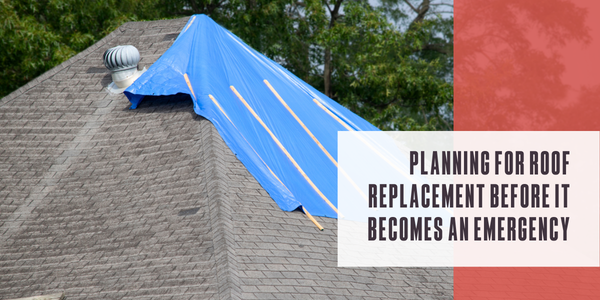
Planning for roof replacement before it becomes an emergency
By Cotney Consulting Group.
Most roof replacements do not become emergencies without warning.
The signs usually develop over time. Repair calls become more frequent. Leaks begin appearing in new areas. Materials show increasing wear. Drainage problems become harder to control. The roof may still be functioning, but the margin for error is getting smaller. When owners wait until the roof can no longer be repaired reliably, they lose control over timing, contractor selection, budgeting and project planning.
That is why roof replacement should begin as a management decision before it becomes an emergency response. For homeowners, commercial building owners, property managers and community associations, early planning creates options. It provides time to understand the roof’s condition, compare realistic scopes of work, budget responsibly and schedule the project around weather and building use.
A planned replacement will still require a significant investment. The difference is that the owner has time to make the decision deliberately.
Start with an honest condition assessment
The first step is understanding the roof’s actual condition. Age matters, but age alone does not determine whether a roof should be replaced. Two roofs installed in the same year may perform very differently based on materials, installation quality, climate, maintenance, drainage and rooftop activity.
A proper condition assessment should review the roof surface, seams, flashing, penetrations, drainage, edges, insulation and deck conditions when those areas can be evaluated. The assessment should also consider repair history. A roof with one isolated problem may still have years of useful service remaining. A roof with repeated leaks in several areas, widespread material deterioration or wet insulation may be approaching the point where continued repairs no longer make financial sense.
The purpose of the assessment is not to force an immediate replacement decision. It is to give the owner a realistic understanding of what the roof needs now and what is likely to be required next.
Repair history often tells the story
Individual roof repairs can appear manageable when viewed one at a time. The problem becomes clearer when the owner reviews several years of service records together. How often are leaks occurring? Are the repairs concentrated in one area or spreading across the roof? Are contractors repeatedly returning to the same details? Are service costs increasing each year?
A growing repair history may indicate that the roof is no longer experiencing isolated failures. The system may be entering a broader stage of deterioration. This does not mean every aging roof should be replaced immediately. It does mean the owner should stop treating each service call as an unrelated event. Repair records, photographs and inspection reports can reveal whether maintenance remains a sound strategy or whether replacement planning should begin.
Understand the cost of waiting
Delaying replacement may seem like a way to preserve cash, but waiting can increase the final cost. A worn roof may allow water into insulation, decking, walls and interior finishes. Wet materials may need to be removed and replaced during the eventual project.
Continued leaks can also damage equipment, inventory, furnishings and occupied spaces. Emergency work may involve temporary protection, after-hours service, interior cleanup and repeated repairs that provide only short-term relief. Material prices and labor costs may also increase while the owner postpones the decision. The goal is not to replace the roof too early. It is to avoid waiting until deterioration has expanded the scope far beyond the roofing material itself.
Budgeting should begin before the roof fails
Roof replacement is easier to manage when the expense is anticipated. Homeowners may need time to build savings, review financing options or coordinate the project with other improvements. Commercial owners and associations may need to include the work in a capital budget, reserve study or multi-year property plan. The first planning estimate does not need to be exact, but it should be realistic enough to support budgeting and timing decisions.
A planning estimate can establish the likely range based on roof size, system type, access, insulation, drainage, edge conditions and known repairs. That estimate should then be updated as the project approaches. Owners should also plan for contingencies. Concealed damage, deteriorated decking, wet insulation or required code upgrades may not be fully visible until the existing roof is removed.
A realistic budget includes room for those possibilities rather than assuming the initial contract amount will cover every condition.
Develop the scope before requesting bids
Owners often request several roofing bids and assume the proposals can be compared on price alone. That is difficult when each contractor is pricing a different scope. One proposal may include full tear-off, insulation replacement and new flashing. Another may assume a recover system over the existing roof. A third may exclude drainage, decking or metal replacement.
Those prices are not directly comparable. Before requesting bids, the owner should develop a clear understanding of the desired scope. Will the existing roof be removed? Can any materials remain? What insulation value is required? How will wet areas be identified? Which flashings, curbs, drains and edge conditions will be replaced?
On larger or more complex projects, a roof consultant, design professional or experienced roofing contractor may help establish the scope. The more clearly the project is defined, the easier it becomes to compare proposals fairly.
Replacement and recover are different decisions
Some roofs can receive a new system over the existing one. Others require complete removal. When permitted and technically appropriate, a recover system may reduce tear-off, disposal and short-term disruption.
However, it is not appropriate for every roof. Wet insulation, damaged decking, trapped moisture, excessive roof layers, poor drainage or incompatible materials may make removal necessary. Building codes and manufacturer requirements may also limit the number of roof layers or the type of system that can be installed. Owners should not assume that covering the existing roof is automatically the least expensive long-term choice. A lower initial price may leave underlying deterioration in place or lead to more complicated replacement work later.
The decision should be based on roof condition, code, compatibility, manufacturer requirements, the existing number of layers and long-term performance, not price alone.
Material selection should follow building needs
Roofing materials should be selected based on the building, not just the product name. The roof slope, climate, exposure, drainage, deck type, insulation needs, rooftop traffic and expected service life all matter. A homeowner may be comparing shingles, metal, tile or another steep-slope system. A commercial owner may be evaluating single-ply membranes, modified bitumen, built-up roofing, coatings or metal systems.
Each option has advantages and limitations. The owner should understand how the proposed system handles wind, movement, foot traffic, drainage and future repairs. Product warranties matter, but the installation details and supporting components matter just as much. A strong material cannot overcome poor flashing, inadequate drainage or damaged decking.
Timing can affect cost and disruption
Roofing work is highly dependent on weather, labor availability and material supply. Planning gives the owner greater control over when the project occurs. A homeowner may prefer to replace the roof before storm season or before listing the property for sale.
A school may need the project completed during a break. A retail property may want to avoid peak shopping periods. A hotel or apartment building may need the work divided into phases. Commercial projects may also involve tenants, equipment shutdowns, crane access and delivery restrictions.
Waiting until the roof is actively failing may eliminate the preferred construction window. The contractor may need to begin when conditions are less convenient simply because the building can no longer wait.
Material lead times should be considered
Some roofing materials and accessories require significant lead time. Special colors, custom metal, insulation, drains, curbs, fasteners and rooftop equipment coordination may not be available immediately. Supply conditions can change, especially after major storms or during periods of high construction demand. Early planning allows the contractor to confirm availability and identify acceptable alternatives before the project is scheduled.
This is especially important on commercial roofs where system components must meet specific design or warranty requirements. A project should not be delayed because a critical accessory was treated as an afterthought.
Occupants and operations need a plan
Roof replacement affects the people inside and around the building. Noise, vibration, odors, dust, deliveries, dumpsters, parking restrictions and temporary entrance closures may all affect normal operations. Homeowners may need to protect attic storage, move vehicles and notify neighbors. Commercial owners may need to coordinate with employees, tenants, customers and service providers. Healthcare, education, food service, manufacturing and residential properties may require additional planning because occupants cannot simply leave during the work.
The earlier the project is scheduled, the more time the owner has to communicate and prepare. A roof replacement should include an occupancy and logistics plan, not only an installation schedule.
Rooftop equipment must be coordinated
Commercial roofs often support HVAC units, exhaust fans, communication systems, solar equipment and piping. Those components may need to be raised, modified, disconnected or protected during replacement. New insulation can raise the finished roof height and reduce existing flashing clearances.
Old curbs may no longer be suitable. Abandoned penetrations may need to be removed. These conditions require coordination between the roofing contractor and other trades. Waiting until construction begins to address equipment can cause delays, temporary patches and added cost. The roof and rooftop systems should be reviewed together during project planning.
Understand warranties before selection
Roof warranties can vary widely. A manufacturer warranty may cover certain materials or system conditions. The contractor may provide a separate workmanship warranty. Coverage may depend on system type, installation method, inspection requirements and maintenance obligations. Owners should understand what is covered, what is excluded, how long coverage lasts and who is responsible for future service.
The longest warranty is not automatically the best choice. A warranty is valuable only when the roofing system is appropriate, the contractor is qualified and the owner understands the maintenance requirements. Warranty review should be part of the system selection process, not paperwork completed after the roof is installed.
Contractor selection should not be rushed
An emergency roof replacement places the owner under pressure. There may be active leaks, interior damage and demands from occupants or insurance representatives. That is not the ideal time to evaluate contractors carefully. Planning provides time to review experience, licensing, insurance, safety practices, references, financial stability and familiarity with the proposed roofing system.
The owner can also compare communication, documentation and project management capabilities. The lowest proposal may not provide the strongest scope or the most reliable execution. Roof replacement is a major construction project. Contractor selection should be based on more than just the number at the bottom of the bid.
Permits and code requirements can change the scope
Roof replacement may trigger compliance with current building codes. These can involve deck attachment, underlayment, insulation, drainage, ventilation, wind resistance, edge metal and other components. The existing building may not meet the requirements for new work.
Owners should understand whether the project will require upgrades beyond replacing the visible roof covering. Permits, inspections and local approval processes should also be included in the schedule. Code-related costs are easier to manage when they are identified before the contract is signed.
A phased replacement may be an option
Large commercial buildings do not always need to replace every section of the roof at the same time. If the property has multiple roof areas of different ages and conditions, a phased plan may be appropriate. The most deteriorated section can be replaced first while newer or more stable areas remain in service. Phasing can help spread capital costs and reduce operational disruption.
However, the phases should be planned as part of one long-term strategy. Transitions between new and existing roof sections must be detailed correctly. Drainage, warranties and future access should also be considered. Unplanned partial replacements can create complicated connections and inconsistent systems.
Emergency planning is still necessary
Even with a replacement plan in place, the existing roof must continue protecting the building until construction begins. The owner should maintain inspections, clear drainage and complete necessary repairs.
There should also be a response plan if a major leak occurs before replacement. This may include emergency contacts, temporary protection procedures, interior cleanup resources and authority for urgent repairs. Planning replacement does not mean abandoning maintenance. The roof must still be managed responsibly throughout the remaining service period.
Early planning creates better decisions
The greatest advantage of planning roof replacement early is control. The owner has time to evaluate the roof, develop the scope, budget the work, compare contractors and coordinate the project around weather and building use. That control disappears when the roof becomes an emergency. At that point, the focus shifts from selecting the best long-term solution to stopping immediate damage.
A roof should not have to fail before replacement becomes part of the conversation. When repairs become more frequent, conditions begin spreading or the roof approaches the end of its reliable service life, planning should begin. The goal is to replace the roof while the owner still controls the timing, scope, budget and contractor selection.
Learn more about Cotney Consulting Group in their Coffee Shop Directory or visit www.cotneyconsulting.com.
About Cotney Consulting Group
Unlike other “business” consultants, Cotney Consulting Group has 65+ years’ experience solving the problems of contractors. With real experience running 8-figure, multi-million dollar companies, our consultants did not learn about business consulting from a book — we have experienced the same problems that you have, solved them and moved on to create a storied history of success. We can share our experiences with you and help you achieve success. Learn more at www.cotneyconsulting.com.
Recommended For You
Determining whether it’s time for a replacement
Read More ...
How to prioritize style and function in your roofing project
Read More ...
7 Signs You Need A New Roof
Read More ...





Comments
Leave a Reply
Have an account? Login to leave a comment!
Sign In