
Extending roof life with protective coatings
By Jesse Sanchez.
How silicone and aluminum roof coatings help protect roofs from weather exposure while improving energy efficiency.
Roofs endure constant exposure to changing weather conditions, and companies like CJ Roofing note that intense summer heat, heavy rainfall and freezing winter temperatures place continuous stress on roofing systems, gradually accelerating wear. Over time, that exposure can lead to leaks, declining energy efficiency and costly repairs. For many property owners, roof coatings offer a practical way to strengthen existing roofs while extending their service life.
Roof coatings function as a protective layer applied directly over the existing roof surface. Once in place, the coating shields the roof from ultraviolet radiation, moisture and temperature fluctuations, three of the primary factors that contribute to long-term deterioration. By limiting that exposure, coatings help maintain the roof’s structural integrity and slow the progression of damage. Because they can be applied to a range of roof types, including flat, metal and sloped systems, coatings have become a common solution for both residential and commercial buildings.
Among the available options, silicone and aluminum coatings are widely used for their durability and energy-related benefits. Each material offers distinct advantages depending on the structure and performance needs of the roof.
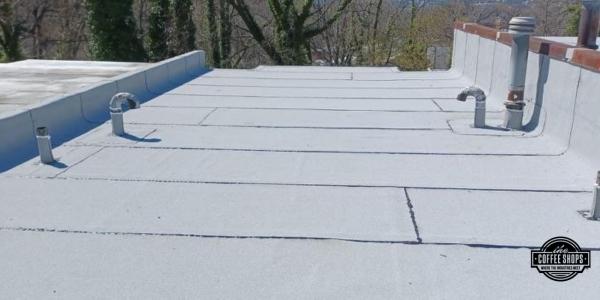
Silicone coatings are frequently selected for flat and low-slope roofs due to their strong resistance to water intrusion. In many buildings, rainfall can collect on flat roof surfaces, creating areas of standing or ponding water. Silicone coatings help prevent moisture from penetrating the roofing assembly by forming a water-resistant barrier. At the same time, their reflective surface helps deflect sunlight and heat, which can reduce cooling demands during warmer months.
Beyond moisture protection, silicone coatings are designed to withstand prolonged exposure to ultraviolet radiation and temperature swings. This durability helps the coating maintain its protective performance even as the roof faces years of environmental stress.
Aluminum roof coatings serve a similar protective role but are typically used on metal roofing systems. Their reflective properties reduce the amount of heat absorbed by the roof surface, helping moderate interior temperatures and improve overall energy efficiency. In addition to reflecting heat, aluminum coatings help protect metal roofs from corrosion. By forming a barrier between the metal surface and environmental moisture, the coating reduces the likelihood of rust developing over time. Aluminum coatings can also be applied over existing roofing materials, making them a practical and cost-effective option for roof restoration projects.
Selecting the right coating ultimately depends on the roof’s design, material and condition. Working with a qualified roofing contractor can help property owners evaluate those factors and determine whether silicone or aluminum coatings provide the most effective path toward long-term roof protection.
Have a question? AskARoofer.
Find your local roofing contractor in the AskARoofer™ Contractor Directory.
About the author

Jesse is a writer for The Coffee Shops. When he is not writing and learning about the roofing industry, he can be found powerlifting, playing saxophone or reading a good book.
Recommended For You
When to coat and when to replace
Read More ...
Roofing made simple
Read More ...
Q & A - What is Alligatoring?
Read More ...

Comments
Leave a Reply
Have an account? Login to leave a comment!
Sign In