

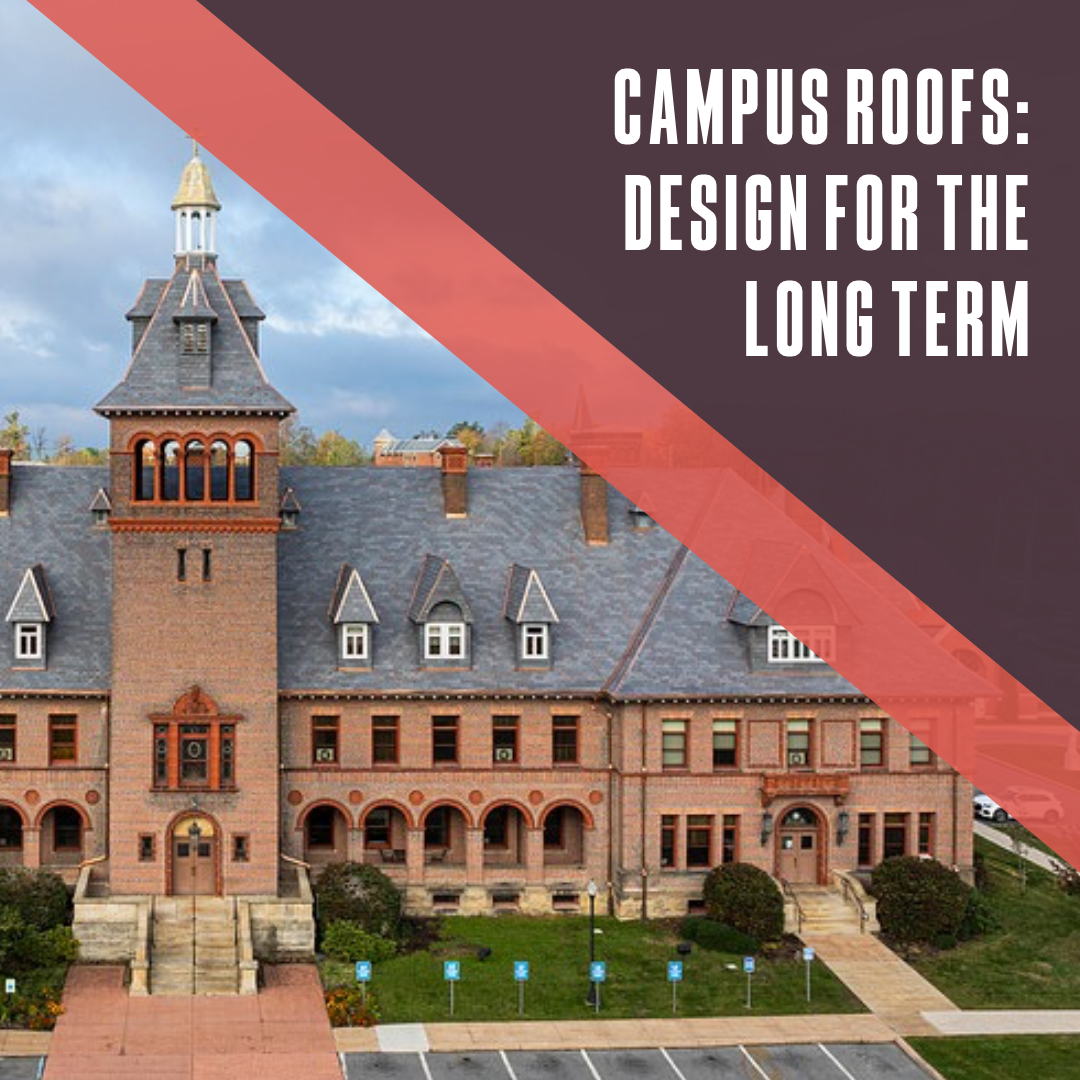
Campus roofs: Design for the long term
By DaVinci Roofscapes.
An architect’s guide to specifying composite slate and shake for schools, colleges and universities.
On an educational campus, a roof does more than protect a building. It helps define a historic skyline, connects new construction to an established architectural vocabulary and supports the institution’s long-range stewardship goals.
For architects and design professionals, the specification must reconcile those visual priorities with structural constraints, severe-weather exposure, maintenance demands and practical installation.
Composite slate and shake products from DaVinci® Roofscapes bring authentic character together with Class A fire and Class 4 impact ratings, resistance to severe weather and strong winds, low-maintenance performance and a 50-year limited warranty. Universities, colleges and schools across the country have used these products on historic renovations, residence halls, learning centers, laboratories, athletic facilities and highly visible mansard roofs. For the design team, that range of applications offers a way to preserve architectural intent while addressing the practical demands of buildings created to serve generations of students.
Why specify DaVinci for educational buildings?
- Connect design intent to institutional priorities: Specify the look of natural slate or shake alongside performance features that campus decision makers value.
- Protect historic character: Use realistic profiles, textures, edges and color blends to complement traditional architecture and existing roofscapes.
- Respond to structural constraints: Consider lightweight composite construction where the weight of natural slate is a concern.
- Support long-term stewardship: Pair low-maintenance materials with a 50-year limited warranty to strengthen conversations about lifecycle value and capital planning.
- Address regional exposure: Bring Class 4 impact and Class A fire ratings into discussions of hail, fire and severe-weather performance.
- Consider constructability: Pre-coordinated bundles can reduce hand mixing and installation labor, connecting material selection to jobsite efficiency.
- Create campus-wide continuity: A successful first building can establish a repeatable palette and roofing standard for future reroofing projects.
Proof on campus: Design challenges, built solutions
Utah State University: Establishing a consistent historic roofscape
Deteriorating cedar shakes on landmark Quad buildings dating to 1889 and 1918 created a preservation and performance challenge. A consistent DaVinci composite shake style and color was used across the Geology building, Old Main and the Ray B. West building. For architects, the project illustrates how a successful material choice can preserve architectural continuity and become a standard across a historic campus precinct.
“We won’t even consider another roofing product for the Quad area. We’re impressed with how the DaVinci product handles our weather conditions.”
— Quin E. Whitaker, PE, MBA, Utah State University
 University of Notre Dame: The slate look without the slate weight
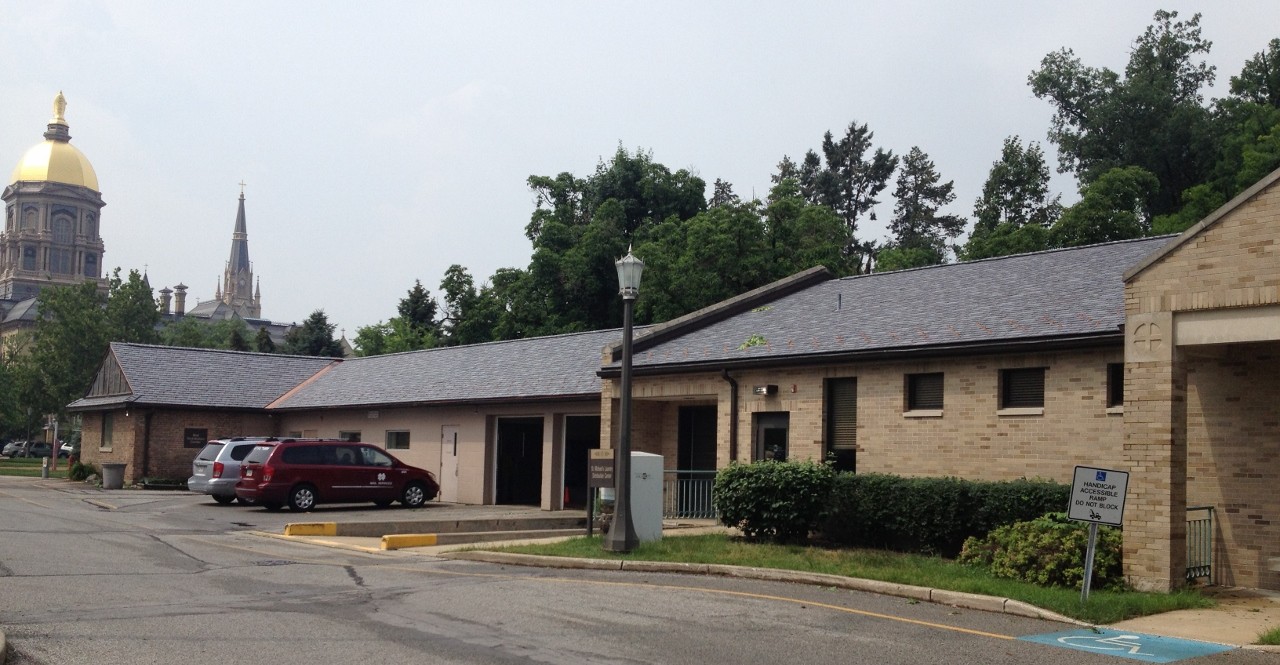
A residential-style learning center could not support traditional slate, yet its roof needed to blend with surrounding campus buildings. DaVinci Multi-Width Slate delivered the desired natural-slate appearance without defaulting to the heavier material. The university also prioritized a long-term product aligned with its sustainability goals. As a further expression of confidence, the university project manager later selected the product for his own home.
“You can’t tell any difference from the natural slate. The roof blends in perfectly with the surrounding buildings that feature real slate.”
— Tony Polotto, LEED AP BD&C, RRC, RRO, University of Notre Dame
 Phillips Exeter Academy: Modern performance, old world character
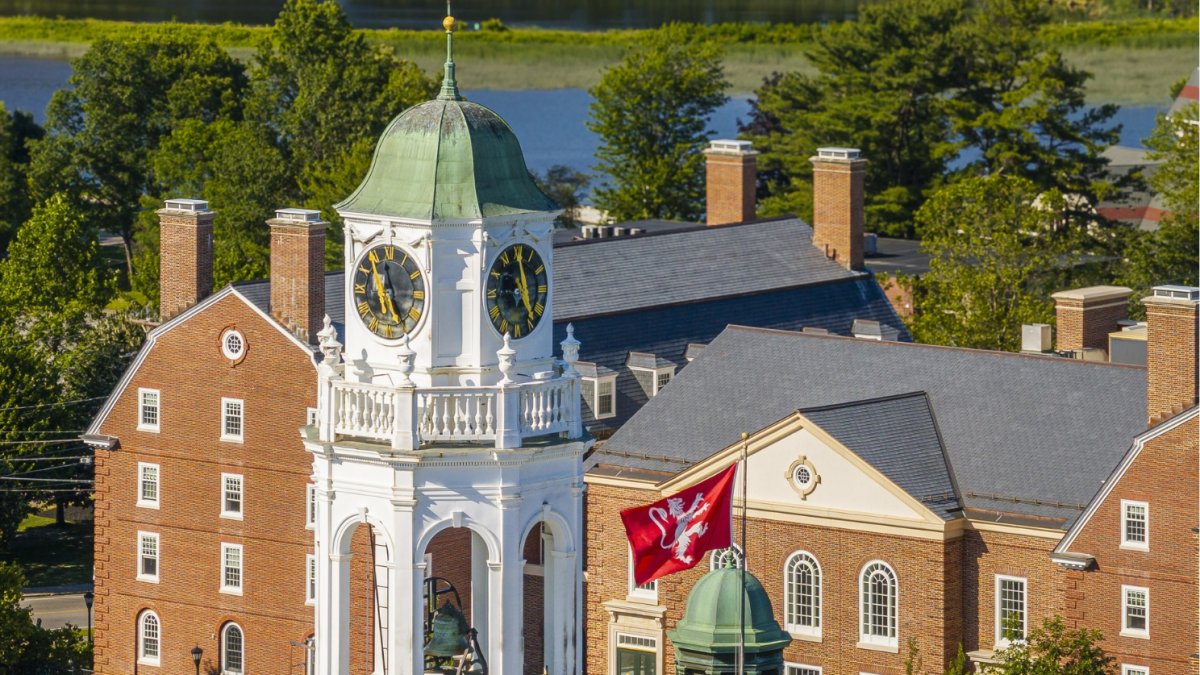
Failing natural slate across a historic New England campus of 147 brick buildings called for a solution that respected the academy’s established character. Inspire® Slate was installed on Wheelwright Dormitory and, years later, on Wetherell Dining Hall, Merrill Dormitory and Langdell Dormitory. Textured surfaces and deckled edges modeled from natural slate provided the historic aesthetic, while lightweight construction, Class 4 hail performance and a Class A fire rating addressed functionality. The design lesson: preservation goals and modern material performance can inform the same specification.
“Using modern technology and materials to retain Old World charm and character is important.”
— Jack Sweeney, Sweeney Brothers Construction, LLC
Georgia Tech: Balancing laboratory protection and historic context
A failing roof over the Daniel Environmental Engineering Laboratory presented unusually high stakes: leakage could create serious contamination and public-risk concerns. Natural slate weight was a concern, but the replacement still needed to complement a historic slate-roofed campus. DaVinci Single-Width Slate in a custom blend of 70% Evergreen and 30% Light Purple addressed the aesthetic requirement, with Class 4 impact resistance and Class A fire performance among the decision drivers. The project shows how color customization, structural considerations and performance priorities can converge in one roofing selection.
“The school had a complex, high standard for this re-roofing project. And, the DaVinci composite slate product fit in every way.”
— Jeremy Dickmann, PRIMM Roofing
Mississippi State University: Constructability supports the specification
The four-story Old Main Academic Center features Slate Gray DaVinci synthetic slate. On its first installation of the product, the Graham Roofing team found it more contractor friendly than other brands it had installed. Pre-coordinated bundles eliminated hand mixing, and the tiles did not require corner bending before installation. For architects and design professionals, these reported handling advantages add a constructability dimension to conversations about material selection, labor and scheduling.
“We saved a tremendous amount of time and labor.”
— Mickey Gilmer, Graham Roofing
More campus applications, more design possibilities
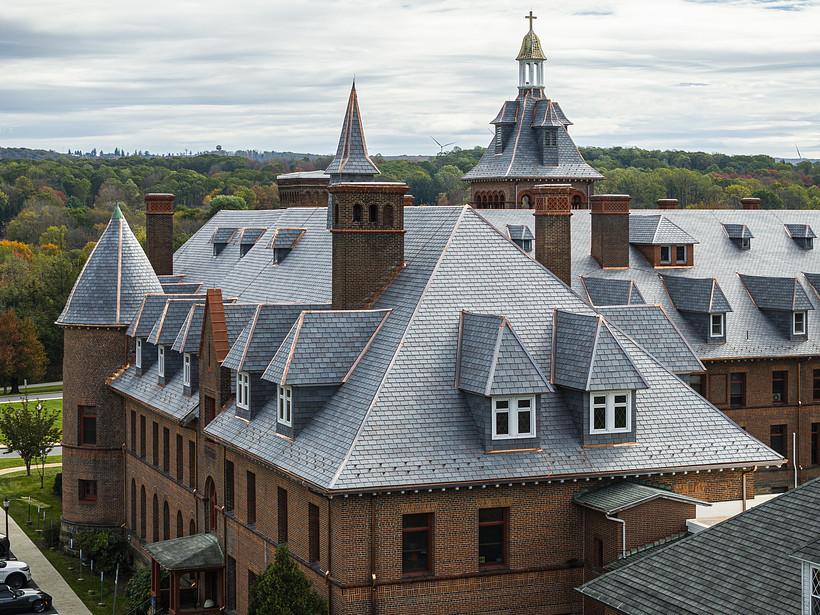 William Penn Charter School, Pennsylvania: DaVinci Single-Width Slate helps a modern athletic and wellness center blend with a 330-plus-year-old campus, connecting contemporary programming with an established architectural setting.
- The College of New Jersey: A roofer recommendation led to DaVinci Slate installations on a residence hall and an aquatic center, demonstrating its use across different campus building types.
- Brownell Talbot, Nebraska: DaVinci Multi-Width Slate answered hail exposure, warranty and color-matching needs across five campus buildings.
- University of Minnesota: DaVinci Multi-Width Slate was selected for Pioneer Hall for its authentic appearance, value, low maintenance and impact and fire resistance.
- Thomas Edison State College, New Jersey: DaVinci Slate delivered a thick traditional profile, reflectance value and Castle Gray color coordination for a new nursing education center.
- Washburn University, Kansas: DaVinci synthetic slate has been used on the alumni center, field house and art museum, demonstrating the potential for a consistent material approach across ongoing reroofing work.
- Primrose School of Blue Valley, Kansas: A repeat owner chose DaVinci Single-Width Slate after a similar roof at another school performed well for six years.
Mansard Roofs: When the roof becomes the campus façade
On mansard applications, roofing becomes one of a building’s most visible architectural surfaces. Profile, texture and color are therefore central to the façade composition—not simply the roof specification. Eight residence-tower buildings at the State University of New York use DaVinci Multi-Width Slate in a European blend across nearly four stories of steep mansard roofing. At Butler Community College in Kansas, 16 structures received DaVinci slate after severe hail damaged 95% of campus roofing. Together, these examples place visual prominence and campus-scale durability at the center of material selection.
“We chose the synthetic slate DaVinci tiles because they’re practically maintenance free. These durable composite tiles won’t crack or break, even if hit with a baseball bat or hammer.”
— Lynn L. Umholtz, Butler Community College
Translate product features into specification value
| DaVinci feature | Benefit to the institution | Architect’s specification opportunity |
| Authentic slate and shake appearance | Preserves campus character and blends with historic roofs | Maintain the original architectural intent with a modern roofing material |
| Class 4 impact rating | Added protection in hail-prone regions | Connect material durability to the campus’s regional risk-management priorities |
| Class A fire rating | Supports demanding fire-performance goals | Bring a clear performance credential into material evaluation |
| Lightweight composite construction | Offers an option where natural slate weight is a concern | Coordinate the desired slate appearance with the project’s structural constraints |
| Weather and wind resistance | Confidence across varied campus climates | Connect the roofing recommendation to local weather conditions |
| Low-maintenance material | Fewer long-term maintenance concerns | Frame material selection around lifecycle value rather than first cost alone |
| Color, width and profile choices | Design flexibility for old and new buildings | Coordinate the roof with existing roofing, masonry and the campus palette |
| 50-year limited warranty | Aligns with long-range capital planning | Give facilities teams a basis for long-term material planning and standardization |
An architect specification playbook for the next campus project
- Start with the building and its context: Identify historic character, structural limits, roof visibility and the consequences of failure. Establish what the roof must contribute to both the building and the surrounding campus.
- Connect local risks to tested performance: Discuss hail, fire, wind and weather conditions in terms the facilities team can use, linking performance priorities to material evaluation.
- Develop visual options early: Compare profiles, widths and color blends against surrounding campus roofs and masonry so the selected product supports the project’s architectural vision.
- Include constructability in the conversation: Work with the roofing team to quantify how product handling and pre-coordinated bundles may affect installation labor and scheduling.
- Design for the campus portfolio — not just one roof: Consider how a successful installation can establish a repeatable roofing standard across multiple buildings while maintaining architectural continuity.
- Document long-term value: Pair low-maintenance performance with the 50-year limited warranty and the institution’s capital plan to support a lifecycle-focused material discussion.
Specify for the next building — and the next generation
For educational buildings, the strongest roofing specifications connect authentic character, tested performance and long-term value. Specifying DaVinci composite slate and shake helps schools, colleges and universities preserve the architecture they value while addressing the demands of campus stewardship.
Start your composite slate and shake roofing specifications on campus and watch them lead to the thoughtful foundation for the next building, the next phase and a coherent campus-wide standard in the future.
Learn more about DaVinci Roofscapes in their Coffee Shop Directory or visit www.davinciroofscapes.com.
Recommended For You

Staggered Cedar Shakes
Read More ...
Around the World in 10 Unique Roofs
Read More ...
Top July articles: Versatile products, important advice and powerful stories
Read More ...



Comments
Leave a Reply
Have an account? Login to leave a comment!
Sign In