



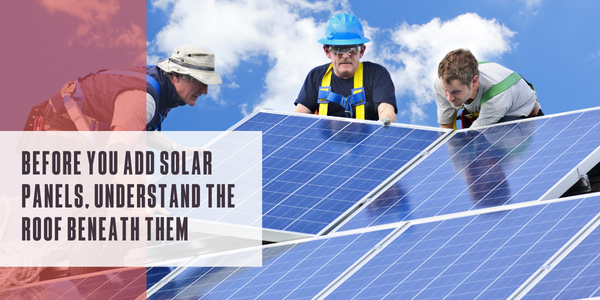
Before you add solar panels, understand the roof beneath them
By Cotney Consulting Group.
Solar can be a sound investment, but only when the roof beneath it is treated as part of the same project.
Solar panels can be a smart investment for many homeowners and building owners. They may reduce energy costs, support sustainability goals and add long-term value to a property. But solar panels are only part of the system being installed.
They must be attached to, supported by and integrated with the roof beneath them. If that roof is near the end of its service life, has unresolved leaks or is not suitable for the planned attachment method, the solar project can become far more expensive and complicated than expected.
That is why the roof should be evaluated before the solar installation begins, not after. A solar contractor may be focused on energy production, panel layout and electrical performance. A roofing contractor is focused on water management, structural support, roof condition and long-term serviceability. Both perspectives are necessary for a successful project.
Start with the remaining life of the roof
One of the first questions every property owner should ask is simple: How much useful life does the existing roof have left? Solar panels are intended to remain in place for decades, which means the roof beneath them should have enough remaining service life to justify the installation.
If solar panels are installed over a roof that will need replacement soon, the owner may later have to pay to remove the panels, replace the roof and reinstall the solar system. That added work can significantly increase the cost of the roof replacement.
A roof does not have to be leaking to be nearing the end of its service life. Shingles may be worn, brittle or losing protective granules. A commercial membrane may have deteriorated seams, aging flashing or wet insulation beneath the surface.
Before signing a solar contract, have the roof evaluated by a qualified roofing contractor who understands the roof type and the proposed solar installation. The goal is not simply to receive an opinion that the roof “looks good.” The evaluation should consider age, condition, repair history, drainage, flashing, warranty requirements and whether the roof is likely to remain serviceable for the expected life of the solar system.
Replacing the roof first may be the better decision
Property owners are sometimes reluctant to replace a roof before adding solar because it increases the initial project cost. However, completing the roof first may provide better long-term value when the existing system is already aging.
Replacing the roof before solar installation allows the contractor to repair damaged decking, improve flashing, address drainage issues and install a system designed to work with the planned solar equipment. It also avoids the disruption and expense of removing relatively new solar panels several years later.
For homeowners, this may mean replacing worn shingles before installing solar racks. For commercial owners, it may involve replacing or restoring the roof and coordinating supports, walkways and attachment details with the solar design. The right decision depends on the roof’s condition, but the choice should be made deliberately rather than discovered after the panels are already in place.
Understand how the solar system will be attached
Solar panels can be installed using several attachment methods, depending on the roof type, slope and structural design. On many steep-slope roofs, mounting brackets are fastened through the roofing material and into structural framing or the roof deck. Each attachment must be properly located, secured and flashed to prevent water entry.
On standing-seam metal roofs, some systems may attach to the seams without penetrating the panels. Even then, the attachment method must be compatible with the roof profile and manufacturer requirements.
Low-slope commercial roofs may use penetrating mounts, ballasted systems or a combination of both. Ballasted systems reduce the number of penetrations but add weight to the roof and may affect drainage, maintenance access and membrane wear.
No attachment method is automatically right for every building. The owner should understand whether the system will penetrate the roof, how those penetrations will be flashed and who will be responsible if a leak develops.
Roof penetrations require roofing expertise
Every roof penetration creates another location that must be properly detailed and maintained to keep water out. Brackets, posts, conduit, wiring and supports must be integrated into the roofing system using details appropriate for the roof type. Simply applying sealant around an attachment is not the same as properly flashing it.
Sealants can deteriorate, separate or be damaged by movement and exposure to weather. A well-designed flashing detail should not depend entirely on a surface bead of caulk to remain watertight. The roofing contractor should review planned penetrations before installation begins. On commercial roofs, the roof manufacturer or warranty provider may also need to approve the details.
Solar installers are experts in solar equipment, but they may not be authorized or qualified to modify every roofing system. The division of responsibility should be clear before anyone cuts, drills or fastens through the roof.
Review the roof warranty before work begins
Installing solar equipment can affect an existing roof warranty. Some warranties require notification before new penetrations, attachments or rooftop equipment are added. Others may require an approved roofing contractor to perform or inspect roofing-related work. Failure to follow those procedures could create questions about coverage later.
Before the solar project begins, locate the roof warranty and review its requirements. Contact the roofing contractor, manufacturer or warranty provider when necessary.Ask whether the solar installation needs prior approval, whether special flashing details are required and whether an inspection must be completed afterward. Do not rely only on a verbal statement that the solar work will not affect the warranty. Confirm the requirements in writing when possible and keep the documentation with the roof and solar records.
Make sure the structure can support the system
Solar panels, racks, ballast and related equipment add weight to the building. The structure must be evaluated for the added weight of the panels, mounting system and any ballast, along with applicable wind, snow and maintenance loads.
Older buildings, long roof spans and structures with previous modifications may require additional review. Requirements will vary based on the building, system design and local jurisdiction.
On commercial properties, a structural engineer may need to evaluate the proposed installation. Residential projects may also require engineering depending on the roof design, local requirements and attachment plan.
Structural capacity should never be assumed solely from the appearance of the roof. The evaluation should also consider where the loads will be transferred and whether the roof deck and framing are in sound condition.
Solar layout can affect roof drainage
Water must still be able to move freely after the solar system is installed. Panels, supports, ballast blocks, wiring and equipment should not block gutters, roof drains, scuppers or valleys. They should not create areas where leaves and debris can collect and hold moisture against the roof.
On low-slope roofs, solar arrays can change wind patterns and make it easier for debris to accumulate around drains and supports. The layout should preserve clear drainage paths and provide enough space for routine cleaning and inspection. Owners should also consider how rainwater and melting snow will move off the panels. Concentrated runoff may affect gutters, lower roof sections or areas near entrances.
A solar design that maximizes panel count but interferes with drainage can create long-term roofing problems.
Leave room for inspection and maintenance
A roof still needs maintenance after solar panels are installed. Contractors need access to flashings, seams, drains, penetrations, roof edges and rooftop equipment. If panels are installed too close together or too close to critical roof areas, future inspection and repair can become difficult.
The design should include practical access pathways. On commercial roofs, designated walkways may be necessary to protect the membrane and guide technicians safely through the solar array. Fire and emergency access requirements may also affect panel placement. Homeowners should ask how roofing contractors will reach areas beneath or around the panels if a leak develops. If a roof component cannot be inspected without removing large portions of the solar system, routine maintenance may become more expensive.
Coordinate the roofing and solar contractors
The strongest projects involve communication between the roofing contractor and solar installer before work begins. The roofing contractor should understand where attachments, conduit and equipment will be located. The solar installer should understand the roof’s drainage, flashing details, warranty requirements and restricted areas.Both contractors should agree on who will perform the roofing-related work.
In some projects, the solar installer may install the mounts while the roofing contractor completes the flashing. In others, the roofing contractor may prepare curbs, supports or attachment points before the solar crew arrives.
The exact process can vary, but responsibility should never be unclear. Owners should avoid situations where each contractor assumes the other is handling the roof details. That is how penetrations are left temporarily sealed, warranties are overlooked and leaks become difficult to assign.
Document the roof before installation
Photographs should be taken before the solar work begins. The record should show the overall condition of the roof, attachment areas, flashing, drainage points and any existing damage. For commercial buildings, a roof plan should identify panel locations, supports, conduit routes, equipment and access pathways.
Documentation protects everyone involved. It helps distinguish pre-existing conditions from damage connected to the solar installation. The owner should also retain the solar layout, engineering information, permits, product details, warranties and contractor contacts.
If future roof work is needed, those records will help the roofing contractor understand how the system was installed and what must be protected or removed.
Plan for future panel removal
At some point, portions of the solar system may need to be removed. The roof may require repair or replacement. Panels may need service. Equipment may be upgraded. Storm damage may affect the roof beneath the array. Property owners should understand who can remove and reinstall the panels and what that work may cost.
Ask whether the solar warranty requires an approved contractor to handle removal. Find out whether electrical disconnects, permits or inspections will be required. Also ask how quickly the solar company can respond if roof repairs are urgent.
A roofing contractor may identify the leak, but the repair could be delayed if panels must be removed before the damaged area can be reached. Planning for that possibility at the beginning helps prevent confusion later.
Watch for debris and animal activity
The protected space beneath solar panels can attract birds, squirrels and other animals. Nesting materials and debris may collect under the array, restrict drainage ordamage wiring and roofing components. Leaves can also become trapped where they are difficult to see and remove.
Depending on the building and location, protective screening may be appropriate. Any screening system should be installed without damaging the roof or interfering with ventilation and drainage.
The roof and solar array should be inspected periodically for debris, animal activity and loose components. Owners should not attempt to reach beneath panels from unsafe ladders or roof positions. This work should be handled by qualified personnel.
Know who is responsible for leaks
Roof leaks after solar installation can be difficult to resolve when responsibilities were not established in advance. A leak may be related to a solar attachment, an existing roof condition, a flashing detail, storm damage or another roof component.
The roofing and solar contracts should explain who is responsible for penetrations, flashing and repairs connected to the installation. Ask whether the solar contractor carries insurance for roof damage and whether the roofing contractor will inspect the completed work.
A post-installation roof inspection can confirm that penetrations are properly flashed, debris has been removed and drainage remains open. Resolving these questions before the project begins is far easier than arguing about responsibility after water enters the building.
Treat the roof and solar array as one project
Solar panels should not be treated as equipment placed on top of an unrelated surface. The roof supports the solar system, protects the building beneath it and must remain serviceable throughout the life of the installation.
Before moving forward, evaluate the roof’s condition and remaining service life. Review the attachment method, structural capacity, drainage, warranty requirements andfuture maintenance access. Bring the roofing contractor and solar installer together early enough to coordinate the work properly.
Solar can be a sound investment, but only when the roof beneath it is treated as part of the same project. Evaluate the roof first, coordinate the contractors and document the installation. Doing that protects both systems and reduces the chance of costly surprises later.
Learn more about Cotney Consulting Group in their Coffee Shop Directory or visit www.cotneyconsulting.com.
Recommended For You
Investing in energy efficiency
Read More ...
Making a lasting impact on communities and the planet
Read More ...
IKO launches Beyond™: A comprehensive sustainability program focused on environment, people and business
Read More ...




Comments
Leave a Reply
Have an account? Login to leave a comment!
Sign In