



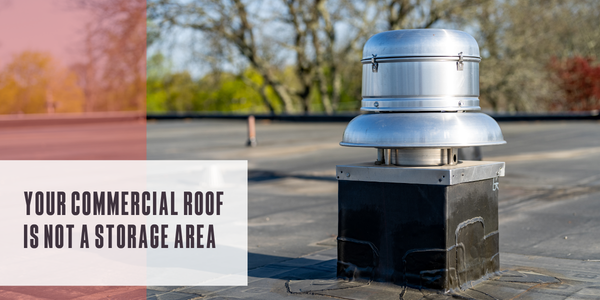
Your commercial roof is not a storage area
By John Kenney, Cotney Consulting Group.
Commercial roofing materials are durable, but they are not indestructible.
A commercial roof is designed to protect the building from the weather. It is not intended to serve as a workshop, storage platform or unrestricted walkway for every contractor who needs access to rooftop equipment.
Yet that is exactly how many commercial roofs are treated.
HVAC technicians, electricians, plumbers, sign installers, solar contractors, telecommunications crews and maintenance personnel may all need to work on or near the roof. Most are focused on completing their own assignment, which is understandable. The problem is that even well-meaning workers can damage a roofing system without realizing it.
A dropped tool, an abandoned equipment panel, a puncture from a fastener or repeated foot traffic around an HVAC unit may not seem serious at the time. However, the damage may not become obvious until the next heavy rain. By then, it can be difficult to determine when it happened, who caused it and whether the roof warranty will cover the resulting repair.
For building owners and property managers, controlling rooftop activity is an important part of protecting the roof investment.
Other trades can damage a roof without knowing it
Commercial roofing materials are durable, but they are not indestructible. Roof membranes can be punctured, cut, scuffed or compressed by activities that may appear harmless to someone unfamiliar with roofing systems.
A technician may set a sharp-edged metal panel directly on the membrane. A worker may drag a tool bag rather than carry it. An old motor or compressor may be placed on the roof while equipment is being changed. Fasteners, wire clippings and pieces of sheet metal may be left behind when the work is complete.
The individual action may seem minor, but roof damage often begins with a small opening or weakened area. Once water reaches the insulation or roof deck, the problem can spread well beyond the original location.
The contractor working on rooftop equipment may never know that damage occurred. The building owner may not discover it until an interior leak develops weeks or months later.
Foot traffic creates wear around equipment
Some areas of a commercial roof naturally receive more traffic than others. Paths between roof access points and HVAC units, exhaust fans, vents or communication equipment can become heavily traveled.
Repeated foot traffic can wear away protective surfacing, stress seams and compress insulation beneath the membrane. The risk increases when workers carry tools, move heavy parts or walk on the roof during extreme temperatures.
Roofing materials may become softer in very hot weather and more brittle in cold conditions. Even ordinary movement can have a greater impact during those times.
Walkway pads can help protect frequently traveled routes, but they do not eliminate the need for controlled access. They should be properly selected for the roofing system and installed along the routes workers are expected to use.
The purpose of a walkway is to reduce concentrated wear and guide traffic. It is not permission to use the rest of the roof carelessly.
Rooftop HVAC replacement requires coordination
Replacing rooftop HVAC equipment is not only a mechanical project. Any change to curbs, penetrations, supports or service lines can directly affect the roofing system.
The new unit may have different dimensions, weight or attachment requirements. The existing curb may need to be modified or replaced. Electrical lines, piping and drainage may have to be relocated. Each of those changes can affect the roof.
Problems often begin when the roofing contractor is brought in only after the mechanical work is complete. By then, penetrations may have been cut, temporary patches installed and new equipment may block access to areas that still require proper flashing.
The roofing contractor and mechanical contractor should coordinate before work begins. They should determine how the unit will be removed, how the exposed opening will be protected, what curb or support changes are required and who will complete the final roofing work.
This coordination becomes even more important when a crane is involved. Protective materials, rigging equipment and replacement units must be staged carefully to avoid concentrated loads and unnecessary roof damage.
The most successful equipment replacements are planned as one coordinated building project rather than two unrelated scopes of work.
Temporary repairs can become permanent problems
When another trade creates an opening in the roof, someone may attempt to seal it with caulk, roofing cement, tape or another temporary material. That may keep water out briefly but it is rarely a substitute for permanent flashing completed by a qualified roofing contractor.
A temporary patch can also conceal the actual condition from the building owner. The area may appear sealed from the surface while water continues to enter beneath the membrane.
Any penetration through the roof should be planned and properly flashed. This includes pipes, conduit, supports, wiring, anchors and equipment attachments.
Roof penetrations should never be treated as an afterthought. Each one creates a vulnerable location that must be integrated into the existing roofing system.
Abandoned equipment should not remain on the roof
Commercial roofs often become collection areas for materials that no one wants to carry back down.
Old filters, metal panels, pipe, broken equipment, pallets, pavers and unused supports may be left behind after service work. These items can damage the roof, interfere with drainage and become windborne during a storm.
Even lightweight debris can create problems. Leaves and trash collect around abandoned materials, holding moisture against the roof and slowing drainage. Sharp edges can puncture the membrane as materials shift in the wind.
Unused equipment and waste materials should be removed promptly. If a pipe, curb or penetration is abandoned, it should be properly closed and flashed rather than capped and forgotten.
A commercial roof should never be used as long-term storage space.
Drainage areas must remain clear
Roof drains, scuppers and gutters are essential parts of the roofing system. Other trades may unknowingly block them with tools, materials or debris.
A small amount of construction waste can trap leaves and other material until water no longer drains properly. Ponding water may then spread across the roof and reach seams, flashings or other vulnerable locations.
Workers should never stage equipment over drainage points or place materials where they interfere with water flow. Drainage areas should be checked after any rooftop work is completed.
This is especially important before heavy rain or storm season. A roof that cannot drain properly may experience serious water buildup even when the membrane itself remains in good condition.
Roof warranties may include specific requirements
Commercial roof warranties often include specific requirements for alterations, new penetrations and rooftop equipment changes. Depending on the warranty, the manufacturer or roofing contractor may need to be notified before work begins.
The warranty may also require an approved contractor to complete or inspect roofing-related work. Allowing another trade to cut into the roof and make its own repairs could affect coverage.
Building owners should review the warranty before authorizing rooftop modifications. They should also keep records showing who performed the work, when it was completed and whether the roof was inspected afterward.
Warranty requirements vary, so owners should never assume that any contractor can modify the roof without consequences.
Establish a rooftop access policy
One of the best ways to reduce avoidable damage is to control who is allowed on the roof.
Building owners and property managers should establish a clear rooftop access policy. Contractors should be required to check in before accessing the roof and explain what work they will perform. They should know where they may walk, where materials may be staged and what activities require roofing contractor involvement.
A simple roof access log can record the date, company, purpose of the visit and the area where the work occurred. This information becomes valuable if a leak or damage is discovered later.
Access doors and roof hatches should remain secured when not in use. Keys should be limited to authorized personnel, and tenants should not be allowed unrestricted rooftop access.
The purpose is not to make maintenance work difficult. It is to create accountability and protect the building.
Inspect before and after major rooftop work
For significant rooftop projects, the roof should be inspected before work begins and again after it is completed.
The pre-work inspection documents the existing condition. Photographs can record seams, flashings, walkways, surface conditions and any known damage near the planned work area.
The post-work inspection can identify punctures, damaged surfacing, open penetrations, abandoned debris or drainage problems before they lead to leaks. Any damage connected to the work should be addressed immediately.
This process protects everyone involved. The building owner has a record of the roof’s condition. The service contractor is not blamed for pre-existing damage. The roofing contractor can confirm that the system remains watertight.
Protecting the roof is a shared responsibility
Every contractor working on a commercial building is responsible for avoiding damage to the property. However, the building owner or property manager must establish the controls that protect the roof.
The roofing contractor should be involved whenever work affects penetrations, curbs, flashing or the roof membrane. Other trades should understand that the roof is a finished building component, not an open work surface.
A few basic controls can prevent expensive problems. Limit access. Use designated walkways. Coordinate equipment changes. Remove debris. Protect drainage points. Inspect the roof after major work.
A commercial roof is a significant investment. Protecting it requires more than responding when a leak appears. It means managing rooftop access and activity before avoidable damage occurs.
Learn more about Cotney Consulting Group in their Coffee Shop Directory or visit www.cotneyconsulting.com.
About Cotney Consulting Group
Unlike other “business” consultants, Cotney Consulting Group has 65+ years’ experience solving the problems of contractors. With real experience running 8-figure, multi-million dollar companies, our consultants did not learn about business consulting from a book — we have experienced the same problems that you have, solved them and moved on to create a storied history of success. We can share our experiences with you and help you achieve success. Learn more at www.cotneyconsulting.com.
Recommended For You
Q & A - Should I Tear My Roof Off?
Read More ...
Icicles on my Eaves 3 Reasons Why?
Read More ...
How often should a commercial roof be inspected? What owners need to know
Read More ...



Comments
Leave a Reply
Have an account? Login to leave a comment!
Sign In